
Hold Slopes and Stop Soil Loss
Cape Fear Commercial Lawn Service Inc builds retaining walls to manage elevation changes and control erosion on properties in Fayetteville, North Carolina.
Sloped lots in Fayetteville lose topsoil with every heavy rain, especially when runoff picks up speed on bare or thinly planted hillsides. You see it in the gullies that form along property lines and the sediment that collects at the bottom of your yard or near the street. Without a structure to break the slope and hold soil in place, erosion continues until plant roots are exposed and the grade becomes too steep to maintain safely.
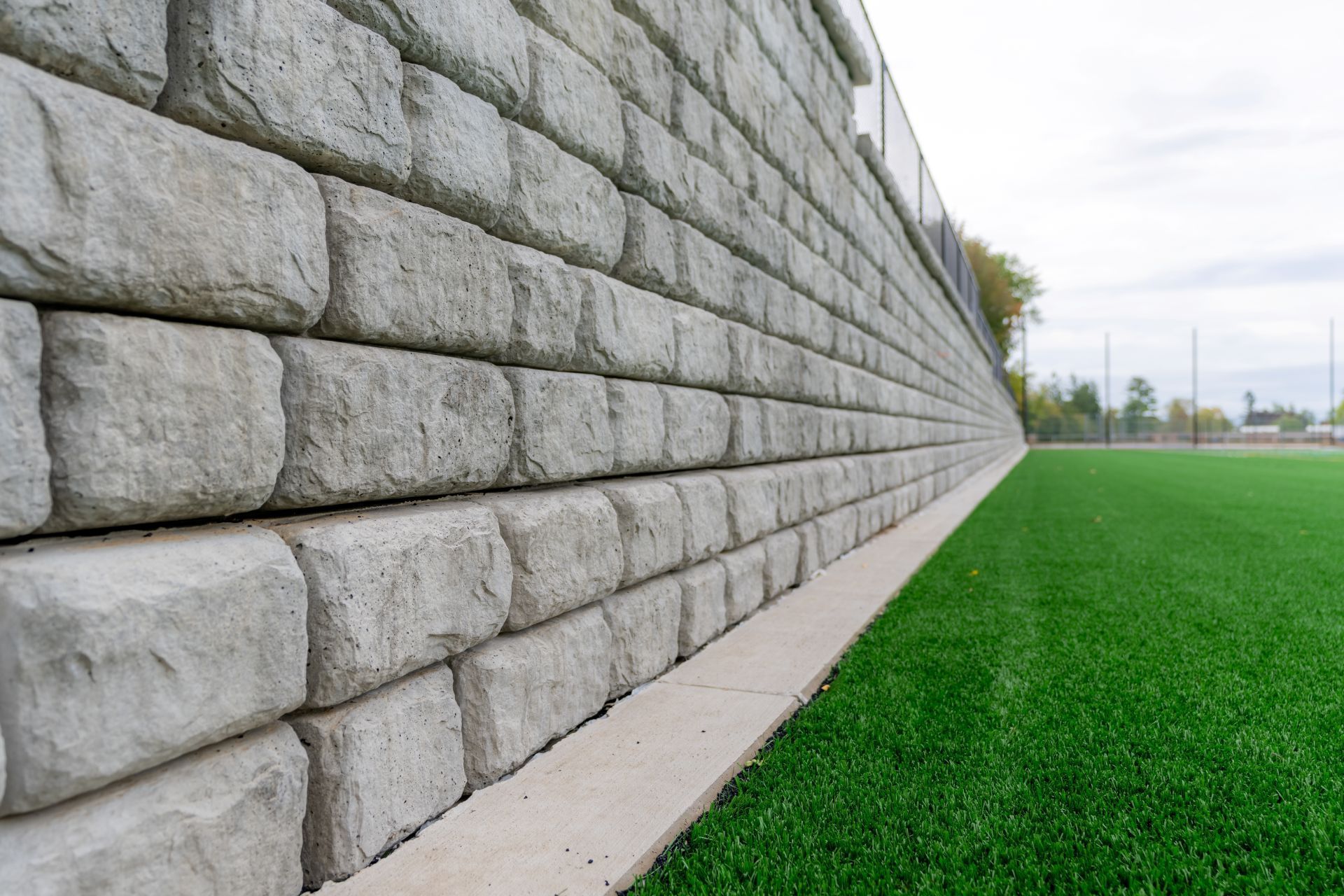
Cape Fear Commercial Lawn Service Inc builds retaining walls that manage elevation changes and prevent soil from washing downhill. These walls provide both functional support and visual definition, working on residential yards with steep grades and commercial properties where drainage challenges create ongoing maintenance problems. Each wall is designed to integrate with your surrounding landscape and hardscaping, using materials and construction methods suited to the soil conditions and runoff patterns common in Fayetteville.
Contact us to assess your retaining wall needs and see how controlling slope and drainage protects your property.
30
Years Of Experience
Stopping Runoff Before It Moves Soil
Building a retaining wall starts with excavating the slope to create a level base and checking the soil behind the wall for drainage needs. In Fayetteville, clay-heavy soil holds water longer, so a gravel backfill layer and perforated drain pipe are installed behind the wall to relieve hydrostatic pressure and keep water from building up. The wall itself is constructed in courses, each one checked for level and alignment before the next is added, and the base is set below grade to prevent frost heaving and settling.
After the wall is finished, the slope above it stays in place during storms instead of washing down. Planting beds on the upper terrace hold soil without erosion channels forming, and the area below the wall remains clear of sediment buildup. Water exits through the drain system rather than overtopping the wall or pooling at the base, which keeps the structure stable and the surrounding landscape intact.
This work does not include regrading areas beyond the immediate wall site or installing new landscaping in the terraced zones. It focuses on building the wall and drainage system needed to stabilize the slope. Walls taller than four feet may require engineering review depending on local code, and some properties need multiple tiers to manage severe elevation changes safely.
Questions That Come Up During Planning
Property owners dealing with slopes and erosion often ask about wall height, materials, and how drainage is handled behind the structure. These answers cover the practical details that matter most during the planning stage.
Sloped properties throughout Fayetteville face ongoing erosion and drainage challenges that retaining walls are built to solve. Cape Fear Commercial Lawn Service Inc evaluates site conditions, installs drainage systems, and constructs walls that hold soil and manage runoff during heavy rain. Get in touch to discuss your property and determine the best approach for your elevation and drainage needs.
